Must have Hummus

Yes – it’s true – hummus is the best – here is my recipe, and remember – once you get it right – it is so much better for you than any shop bought variety – in which there are usually many additives you really do not want to eat – such as palm oil (I mean- Why?) and artificial flavouring to name the most obvious, and they are lazy about spices so to compensate they add way too much salt

The answer is to make your own – and once made it keeps well in the fridge for many days. Also it’s a great way to get more fresh vegetables down you as you can easily and quickly prepare celery sticks, carrot sticks, cucumber sticks and paprika (bell pepper) sticks – just to name a few – to dip into your Hummus and munch on –

Also a great quick fail safe party snack and great to get kids to eat healthy food – which can often be a real hurdle. On top of that is that it is very, very economical, it costs almost nothing to make.

a tin of chickpeas in brine
Juice of half a lemon
water
2 – 3 tablespoons of tahini
ground cumin – or even whole cumin seed.
a pinch of salt

Drain the chickpeas
squeeze the half a lemon
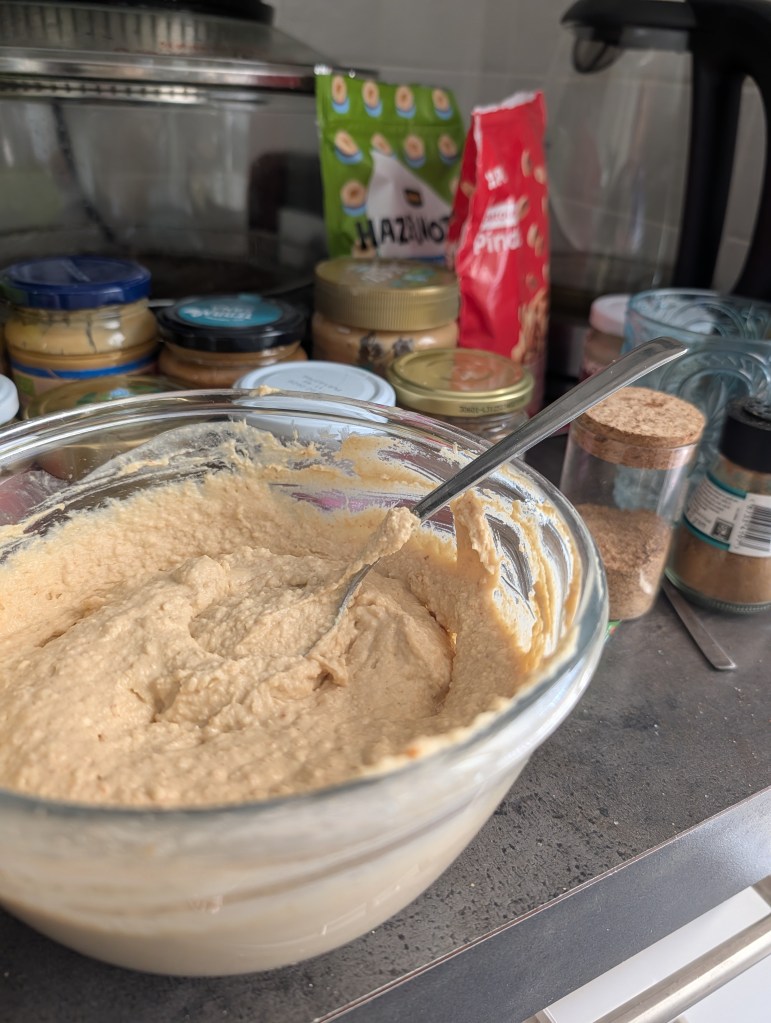
Then simply chuck it all in the blender – and blend until smooth-ish , adding water to get the right potato-mash consistency (it does not have to be silky smooth – some rough body to the hummus is part of what makes it so delicious – then salt or add more spices to get the flavour just right!
I add ground fenugreek or curry powder to mine, and sometimes use other kinds of nut butters – peanut is possible or almond, pine nut, pistachio or cashew – but make sure you use 100% nut butters with no additives whatsoever- not even salt.
Also, you can make a hummus out of ANY kind of bean. Lima beans, black beans, red kidney beans, berlotti beans – simply try them out – see how to adjust.
You can also add fresh herbs if you wish chopping fine before adding to the blender. Try parsley or chives, garlic or dried provincial herb mix.
You can even experiment with vegetables, add some spinach, try beetroot, finely chopped spring onion.

You have choices. take them.
Cheese with everything?

Cheese. That salty, gooey, milky menace we’ve been trained to worship. Stick it on a sandwich, melt it over pasta, or eat it in great chunks after dinner. It comes disguised it in crisps, sauces, and snacks that don’t even deserve the word “cheese.” The dairy industry wants you to think it’s wholesome; reality says it’s a biochemical seduction.

Here’s the dirty secret: cheese is addictive. Not just “I like it a lot” addictive, but genuinely biochemically addictive. Casein, the primary protein, breaks down into casomorphins – tiny opioid-like compounds that light up the brain’s reward system like cocaine. In plain English: cheese messes with your brain like a tiny drug dealer. And the more processed it is, the stronger the hit.

Meanwhile, your arteries and knees are quietly filing complaints. Saturated fats, salt, and inflammatory compounds – perfect for clogging your blood vessels and aggravating joints – are all concentrated in this innocent-looking ‘food’. Digestive havoc? Also on the menu, even if you haven’t been officially diagnosed as lactose intolerant.

Globally, most humans live just fine without cheese. Western obsession is a bizarre outlier, fuelled by clever advertising and a relentless parade of “cheese-flavoured” imposters – chemicals pretending to be cheese with the casein carefully left in are quietly reinforcing the addiction without delivering any of the minimal nutritional perks. Yes, you are addicted, and yes, you have been groomed.

Escape is possible. Cold turkey works: toss the cheese, read labels like a hawk, and savour the moment you realise your taste buds can function without casomorphin hits. If that’s too brutal, phase it out slowly. Swap in some plant-based alternatives, experiment with nuts, tofu, nutritional yeast, or just bold herbs and spices. Learn to cook! It’s less about deprivation and more about reclaiming your autonomy from a substance designed to hijack your brain.

Cheese tastes good – but not good enough for terminal self destruct. Arteries, joints, metabolism, and self-control would all sign a petition demanding its removal – if you ever asked. The rest of the world manages perfectly well without it – so can you. And the sooner you do, the less time you’ll spend slavishly, addictively, defending the very thing that’s making you ill.