White bread

I just ate the last one

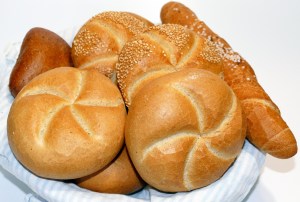
A Kaiser roll – the hell of white bread – probably the unhealthiest thing I eat.

I shall have to quit all bread – especially the Kaiser roll
Ooh and my other favourite the croissant
Ooh! And there is the chocolate croissant too – I also love that – and French bread delicious!
And I like those little whole-wheat crackers you can put anything on
melba toast they are called – yes I love them too

I also love sesame seed knakerbrood. (crispbread or cracker to you)

In fact I am a total knakerbrood fan
I have ta least five varieties in my knakerbrood tin on the kitchen counter where I can easily get at them.

These are foods I will have to drop for the duration
perhaps forever
I know that as I go on with this diet I will loose the taste for them
as I did when I was backpacking around Southeast Asia
where you only get rice and there is no bread.

It worked

But it also worked because I was carrying an 11 kilo backpack and walking everywhere.

So this is how it’s going to be, the crackers can wait, they keep forever.
The bread is all now gone – there is none in the house and no more is entering the house.

I just hope my husband doesn’t start baking his glorious whole-wheat loaves again
they are irresistible.

The third diet

The third diet is the one that is going to work.

The third diet is the one that is right for you.

The third diet is the one that will last you the rest of your life.

Provided you have your head screwed on right, the third diet is the one you get to when you start thinking about diet, stop panicking, and start, finally, listening to your body.

Let me explain.

The first diet.

The first diet is the one you grew up with. It’s what you have always eaten. It is the diet you know, and what you have grown used to eating. This diet is what your family ate, or at least gave to you to eat as a baby, as a small child, though you may have thrown tantrums about what you were given, you will have eaten and liked most of it. Or you mistrusted all food given to you and developed absolute hatred for certain foods. As you grew up you started choosing within the allowable and available foods, if there was any choice at all, luckily for most people there is choice.

Since you started choosing your own food, your diet has shaped you. The first diet has two stages, the second stage is when you become capable of buying your own food, making your own food choices, cooking your own meals. Eating just exactly what you like all the time. now for most people, this leads to healthy sustainable food choices.

Or it used to.

Nowadays it doesn’t always lead to a good healthy diet, and we know it. We are led astray by food marketing, advertising and promotions. Whether we know, or care about it, or not – we choose from the food marketed to us, and this becomes our daily diet. This is the first diet – most of us do well, some of us do very badly, we develop illnesses caused by bad food choices, diabetes or heart problems, we become overweight or have deficiencies which lead to disease. The first diet may not be healthy, but it is what we know, what our families know, what our culture knows. If we are lucky, it is a great diet, most of us are not so lucky and most of us do not make good choices.

So now we get.

The second diet

The second diet is what happens when we become aware of what we are eating and start thinking about it. The second diet happens when we try to change our diet, when we discover how sick we are making ourselves, when we are unhappy with our appearance our health, our longevity.

This is the mad panic reaction, the shock reaction to our bodily state. We start dieting. The yo-yo dieting reaction starts up. The fad dieting, there are so many restrictive diets of all varieties, some good, some not so good, some so unhealthy they are downright dangerous. The GI diet, the keto diet, the south beach diet, the Aitken diet, the apple diet, the 5-8 diet, the fasting diet, I could go on and on there are so many. The restrictive and often unhealthy way we use the same food products and marketing and dieter restriction to try to change how we eat is truly concerning. We rapidly try to change how we look and how we feel about ourselves. This can lead to all kinds of other problems, bulimia, anorexia, diabetes, deficiencies of all kinds. So, we aren’t doing ourselves any good. The second diet takes us to the other extreme of trying to control every little thing about our food intake. The point is not to be extreme but look at yourself, your life, your lifetime habits, the diet of your family, your culture and your country. It is not to force change on the body and hate yourself while doing it. Most people live inside of the second diet all their lives without ever discovering there is another choice. But sooner or later we do start to think again.

And this leads to

the third diet.

The third diet is when you start being sensible about it. The third diet is when you start asking and answering the right questions, without demanding that the answers be what you want. It is when you allow science to answer the questions accurately. We hope that we can rely on the media to provide independently researched good quality science with no money, backing, promotion or government subsidy to screw up the answers. Believe me the answers can be totally screwed.
It happens! It happens so much you wouldn’t believe it. Always check and double check that what you are reading or prepared to try out is accurate. On the diet front, follow the money, if it is not good independently funded research it’s probably promoting a diet that may make you seriously ill.

So, what do you seek in the third diet?

When you finally make your way to the third diet, you will be eating for you and your body at last. You will be taking care of your health and be alright with what you personally can and can’t achieve. You’ll ease up on things and have what is workable in your life, with, what is available in your area, your climate, your culture. You will be able to change any part of it for yourself, whenever you need to, so you’ll feel good about yourself at all times. You will be able to ignore the advertising, the lies, the sickening foods.

This is where health starts.

The third diet.

It’s what you choose to eat once you take stock of where you are and what you know. When you understand the food fads and advertising, when you are no longer swayed by programming even by your own government or culture. They may not have your health at heart but be more interested in, say, the meat marketing board, or the dairy industry than they are in your health.

The third diet is where you learn to make the choices best for you. So thought you are in the same environment you can, for instance, say no not the hamburger but I do want the  side salad or say not the milkshake but I’ll have the juice – see for yourself, make the choices that are right for you.

The third diet is when you ask, how poisonous is this, exactly? And you are prepared to look it up. But you allow yourself, just sometimes that mouthful of chocolate, which is fine, a little bit of what you fancy does you good.

Just occasionally that is the right thing to do, not all the time.

The third diet is when you are prepared to teach your body what to eat, what to like. It’s when you teach it to metabolise foods that are better for it. It is when you listen to what your body really wants and likes, all the way to your microbiome. When you consider more than the mouthfeel or taste, the balance and texture of a food or dish. It is when you are prepared to look at what your food actually consists of, and what it does to your body.

The third diet isn’t just a change of perspective, it isn’t for ‘getting thin’ it isn’t even just for health.

The third diet is a personal revolution.
addictive food

let’s start with cheese

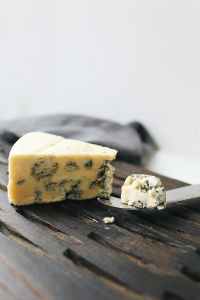
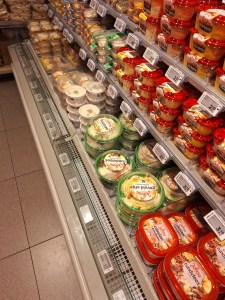
Cheese is highly addictive due to the casein, salt and fat in it.
The producers of cheese products know this, they have known this for quite some time, they prepare the cheese they sell to you specially to make it as addictive as possible so you will be forced to buy and eat more and more of it

They do not care what it does to your health and your mind, except to condition you into buying and eating more cheesy things. The problem is, how do you stop eating something you like to eat which is in or on just about everything we eat?
Once you know it is addictive and is so very unhealthy, how do you stop?

Despite the fact that you believe you like it.

We’ll work on this together

I had some trouble stopping myself eating cheese, it was exactly the same trouble I had when I quit smoking. Not only is it fattening and unhealthy, it is also addictive, just like sugar and salt which are also added to just about everything we eat.

Cheese is everywhere, on your Pizza, in your sandwich, in lasagne, in your macaroni, on your spaghetti, It is really hard to think of a meal that does NOT have cheese in it when you first start out NOT eating cheese. It is also, so moreish, we all love to eat lots of it. The advertisers tell us we love it and we readily and happily agree with them.

Melting gooey sticky stringy oily yellow cheese
On everything

So it’s even harder to quit that smoking, because at least these days we are not bombarded with smoking messages saying how cool it is and great it is and good for us it is. The food marketing industry is now using the exact same strategies the tobacco industry used to make us eat more cheese, like more cheese and defend our sacred cheese.

It’s such clever brainwashing we don’t even know we are brainwashed
Just look at advertising
Or rather, don’t

We have come a long way from the delightful brie made by Mr. local farmer, or the real traditional stilton. The cheese being sold to us now is not really cheese at all, certainly not in the traditional artisan sense. What we get now is a poor reflection of the old local cheese makers varieties, so much so it’s impossible to name any but the most well known mass produced ones. Think about it, what locally produced cheese can you name, or better yet, do you eat?

If we can get ourselves to the point that we stop eating this mass produced muck and go back to occasionally treating ourselves to a local handmade speciality, we are already ahead.
Try not to eat anything with cheese on it for a few days at a time. Say ‘hold the cheese’ and find out how dishes taste without it. It worked for me, it can work for you. Try it and think about how you feel.

As you start paying attention to how you feel and what you think it will become easier to stop eating cheese altogether.
Only when you have reached this stage will you realise how prevalent cheese is in your life and your diet. You will also notice you feel a lot lighter and have less trouble with your knees.

Restaurant review L’Amandine

L’Amandine

Salon de Thé – Restaurant
chef. Myriam Cadet
host. Hugo Eenhoorn

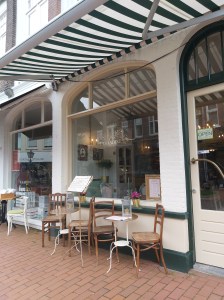
This little place in Bussum, The Netherlands is worth a visit
If you are ever in the area  visit this a charming little tea house where lunch is as pleasant as it is in France.

Stop by if you are parched and just need a cup of tea or linger longer for lunch or dinner.

They have a sound menu where even the vegan is catered for, order a sandwich, a full hot meal or a delightful plate of grilled vegetables at any time of day.

We sampled them all and they are all delightful.
The food is of a high standard, the dishes are all cooked to order. The Chef, Myriam Cadet knows what she is doing in her little kitchen. No fast food here, just French dishes done well.

We will be returning whenever we are in Bussum. I highly recommend this little gem.

the details

L’Amandine
Salon du Thé -restaurant
Havenstraat 134 B
1404EM Bussum

http://www.lamandine.nl
+31 642133755

Sweet vinaigrette.

Recipe

Extra virgin Greek olive oil 1/4 cup
Mirin 4 tbsp
Braggs cloudy apple cider vinegar 1/8 cup
Fine table salt to taste
Fine ground white pepper to taste
White granulated sugar 1/4 tsp
Dijon mustard 1/2 tsp

put in a jar with a lid and shake well till thick and emulsified.

This vinaigrette it is delicious, and not too sour.

Vinaigrette is all about the balance, the exact measure of oil, sweet, sour and salt, with a hint of spiciness.
I find the taste is quite different depending on the exact elements us use, should it be a Greek extra virgin olive oil or do I go for the Spanish which has quite a different flavour?
The mustard, well, just how many kinds of mustard are there?
Some are delicious in vinaigrette and some are only edible on hot dogs.
They can be rough ground or smooth, sweet or very salty, each make is completely different and adds a totally different flavour profile to the vinaigrette.

As for vinegars, there is possibly even more variation, white wine vinegar, Japanese rice wine vinegar, apple cider vinegar. Each with its own unique flavour, so experiment, decide which one to use to get the exact flavour you are looking for.

Sugar, each variety has its own unique flavour, white granulated in this case which has very little flavour, but just adds sweetness. There is deep dark muscovado, or demerara and also jaggery. All these have their own uses, and flavour recipes differently. Sweetners of all kinds have a unique effect on every dish you add them to.

Even salts have subtle flavours from table salt to black Hawaiian or pink himalayan to fleur de sel, and there are more.
I use them all in different recipes and in different ways.

Therefore I think it is important that we are clear in recipes which kind we use, which ones make the exact flavour profile we are looking for.
Each variation in the ingredients gives a variation to the flavour profile of the finished vinaigrette, sauce or dish.

So there are two recipes today

The basic recipe is

oil
vinegar
mustard
salt
pepper
sugar

This gives you the basic ingredients, and the one for todays sweet vinaigrette above, which gives you the exact recipe.

Good luck with experimenting and getting the balance right.
Every time you make a vinaigrette you can try a different mustard, a different oil a different vinegar and so on, and each time get a different vinaigrette.

That is the art of cooking, to experiment with a known recipe, technique or principle and find out what you like best or what goes best with the rest of your dish.
Dare to be different, you can even play with the proportions.
Do you want more mustard? Less salt or more sugar or oil?
What if you use honey or add celery salt instead?

Try it.

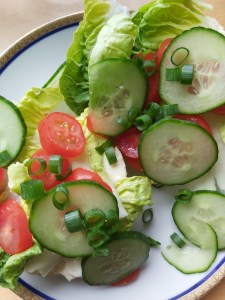
This recipe is great with all kinds of fresh salads, we ate it with little gem lettuce cucumber slices and cherry tomatoes, with a sprinkling of finely chopped spring onion.

Let me know how you get on

Out to lunch

One of the greatest pleasures we have is eating out.

One of the few things we can only do here while on earth in the physical is eat. No angels harps or hellfire here, here we have food.

So, of course we have turned food into an artform, or at least some of us have, the chefs. I wish I was one of them, except for the hours they keep.

Dishes of fresh tomatoes with burrata and basil, searingly hot peppers tossed in a wok with prawns and garlic. The delicacy of a peach fresh from the tree, gently marinated and served with vanilla ice cream, warm and juicy, sweet and succulent.

Lunch out.
It must be my favourite occupation to sit at a little table outside somewhere, town or city, village or countryside and watch the world go by. I can think of nothing more deeply satisfying or relaxing.

We pick a likely looking table at a fairly busy restaurant. The instant waiter helps us efficiently order drinks and menus appear in our hands.

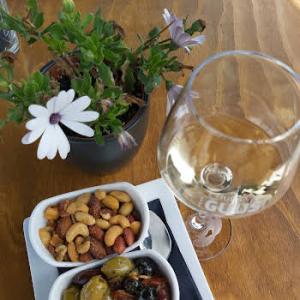
Today I put my book and pen away for lunch and just absorb. The waiter materialises to serve me a chilled wine. I know next to nothing about wines so I have let him choose whatever he thinks is best. Thankfully I am not disappointed. Crisp and fresh as the sparking fountains in the square.

The gentle hubbub of the lunchtime crowd around me comes into focus. I even slide my travel guide surreptitiously off the table and into my bag. Olives, nuts and bread with dab of butter arrive as we peruse the menu. As usual we cannot decide, salads, soups, sandwiches, fried fish or stuffed courgette flowers?

I love Europe, specially France I believe they invented lunch. An hour of two to while away between morning and afternoon. Time to savour a glass of good wine, to eat a new dish, to make pointless conversation.

It is a glorious moment to enjoy all the good things about the art of food, the glint of cutlery, white napkins, a charming waiter. And somewhere behind all this the hellish madness of a kitchen run by an enraged chef which we thankfully have nothing to do with at all.

We smile at each other across our little table, knowing we have picked a good one this time.